• Home
  • About
  • Shop
  • Pilgrimages
  • Online Courses
  • Art Gallery
  • Free Resources
  • Sign up
  • Contact
Menu

Gather the Keeners

Reclaiming grief through story, art and ritual
  • Home
  • About
  • Shop
  • Pilgrimages
  • Online Courses
  • Art Gallery
  • Free Resources
  • Sign up
  • Contact
Check out our 2025 Scottish keening retreat
AN Introduction to Keening Course
Visit the shop
Weavings in the shop
Celtic Soul Prayer Beads
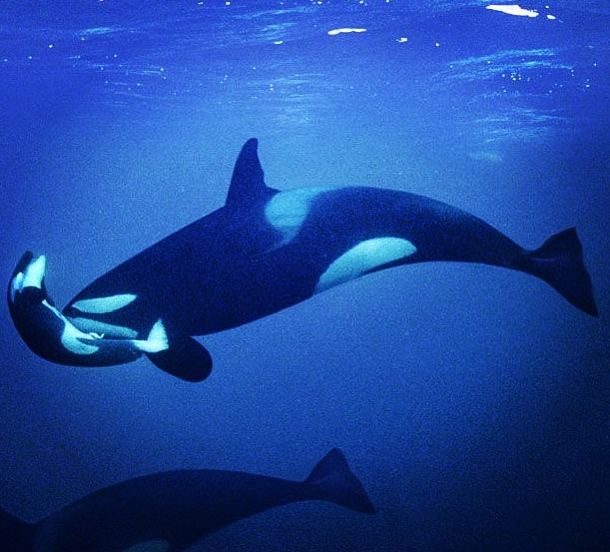
                    Orca with the Isle of Eigg in the background and the peaks of Rum in the distance.                           &nbsp…

                    Orca with the Isle of Eigg in the background and the peaks of Rum in the distance.                                                        Click photo for source – Wilderness Scotland

The Last of the Scottish Orca’s

August 30, 2018

It’s been an emotional journey following the lives of Tahlequah, her calf, and her pod in their heartfelt grief ritual. Killer whales are one of the most widely distributed species, although many of the individual pods are severely threatened. The International Union for the Conservation of Nature (IUCN) is a nonprofit group which maintains the ‘“Red List”  a global list of endangered and threatened wildlife. While they haven’t put killer whales on the list many individual pods of orca are facing widespread and localized threats to their survival.

Before I introduce the Scottish orca pod to you I had to share this recording (made by the Whalemuseaum.org) of Tahlequah and her pod communicating. This was recorded on the 29th July, 5 days after Tahlequah’s calf had died. Click on the whale to listen to them.
orca clip art.jpeg

The top photo isn’t Puget Sound but an orca swimming off the coast of Eigg in Scotland. This is where I run my Ancestral Mothers of Scotland retreat each year. Just a few months ago the same pod was spotted in the River Clyde!

  Ritual and ceremony inspiring connection and activism - click to view prayer beads in                              the shop

  Ritual and ceremony inspiring connection and activism - click to view prayer beads in                              the shop

The Home Range of the West Coast                       Community

The Home Range of the West Coast                       Community

The West Coast Community

Britain occasionally has visits from transient Orcas who travel down to Northern Scotland in pursuit of their prey. Many of these visitors are from the Icelandic population of Orcas. Transient Orcas can be spotted from Shetland, Orkney, and Caithness where they are regularly seen. Scotland however, has its own resident pod of 8 Orcas that are regularly seen around the Hebrides, where it is commonly referred to as the West Coast Community. These animals are sighted year round, throughout the inner and outer Hebrides, particularly around the Small Isles and the Isle of Skye. These resident Orcas never mix with the transients from the North.

Research from the University of St Andrews in Scotland and North Carolina State University carried out a study, published in the journal Behavioural Ecology and Sociobiology which discovered that the main difference between the transient pod and the residential pods is their diet. Residents eat fish, whereas transients hunt and eat marine mammals, including seals and porpoises. In the 40 years that these animals have been studied, scientists have never seen a resident eat a mammal and never seen a transient eat a fish.

Each of the Scottish resident Orcas can be identified by their unique markings, and have been given names: John Coe, Floppy Fin, Nicola, Moon, Comet, Moneypenny, Aquarius, Puffin, and Occasus.

lulu.jpg

The body of Lulu, one of the West Coast Community orca pod who washed up on the Hebridean Isle of Tiree

‘Possibly one of the most contaminated individuals in the world’

Last year, the body of a female orca was found on the shores of the Isle of Tiree, Scotland. Her name was Lulu and she was one of the West Coast Community pod members. She died after becoming ensnared in fishing nets yet after analysis it was found that her body produced surprising results, as Rebecca Morelle reports for the BBC reported, her body was found to contain one of the highest concentrations of pollutants ever recorded in a marine mammal.

The Scottish Marine Animal Stranding Scheme and the University of Aberdeen conducted an in-depth investigation of Lulu’s corpse and found that analysis of her blubber revealed a PCB concentrate 100 times higher than the accepted toxicity threshold for marine mammals. High PCB levels are linked to poor health, impaired immune function, increased susceptibility to cancers and infertility. The investigation revealed that Lulu was at least 20 years old but apparently never reproduced, despite being much older than the average age for maturity in killer whales. Brownlow called Lulu’s apparent infertility an ominous warning and said it is “increasingly likely that this small group will eventually go extinct.”

Scotland has known orca’s around the Hebridean isles for thousands of years. Some of the earliest people to these islands might well have swan with these great creatures in their hand-built boats as they came to spend the summer gathering and hunting. This Samhain I am launching an Ancestral Mothers of Scotland online Wheel of the Year course which will cover an ancient Scottish wise woman, Cee-al, who has a unique connection with the creatures of the Hebridean seas!

       Click on the image for the                   documentary trailer

       Click on the image for the                   documentary trailer

The Fate of Captive Orca’s

According to the latest data, As of January 2024, at least 54 orcas are held in captivity in marine parks worldwide (World Animal Foundation).

I remember campaigning in the early 1990’s when I lived in Brighton, on the south coast of England to free Missie a dolphin who I think had been in captivity for around 20 years (I was the same age). With great campaigns all over the country, the majority of these businesses shut down and closed their doors forever. Missie, the dolphin from Brighton was released back into the wild in the Caribbean (with several other UK dolphins).

free the whales.png

A great short film created by the International Marine Animal project discussing Sea world’s lies of happy and healthy captive orcas and the real alternative of returning them to a sea sanctuary.


Organizations to support

freeing.png
Seashepherd.png
The Whale Museum.png

The Whale Museum: promoting stewardship of whales and the Salish Sea ecosystem through education & research. You can support their work in various ways including adopting a killer whale! 

screen-shot-2018-08-17-at-4-32-08-pm.png
WDC.png

Links and source articles

World Animal Foundation. Animal Captivity Statistics – Deprived of the Right to Freedom

PCBs: Why Are Banned Chemicals Still Hurting the Environment Today?

Baby Orca Death Could be Linked to Salmon Farm Virus

Dead orca found with extremely high levels of PCBs

Killer whales seen in river Clyde

U.K. Killer Whale Contained Staggering Levels of Toxic Chemical

Killer Whales Hunt in ‘Stealth Mode’ 

Final WOTY Graphic.jpg

Touched by the Wing of Talieasker

August 30, 2018

The Ancestral Mothers of Scotland Wheel of the Year 

The Ancestral Mothers Wheel of the Year

We are approaching the threshold between Lughnasadgh and Autumn Equinox. Summer has felt endless, a groundhog day repeating itself over and over. For me, summer started with long lingering Scottish twilights and progressed to Appalachian nights full crickets and cicada lullabies draped in a clinging humidity with a constant thread of spiders webs.

crow.jpg

Yet I can feel the threshold approach, whispering change. It’s ushered in by the wing tips of an age-old figure, Talieasker. She’s been with me most of my life, and no doubt made herself know to others before me.  She was there when my teenage self raged with anger with a desperate longing for something modern life no longer holds, even although then I didn’t know what that was.  She and I danced in my need for catharsis, an outlet to hold the screaming in reaction to what we are doing to the world.

                             My crow shadow

                             My crow shadow

I am descended from a long line of wise women – for I too am a shapeshifter, a mythmaker, a woman who has always had one ear to the ground and a foot in the other world. Sometimes my shadow shows my other self, sometimes crow sometimes the shadow of a bear, I am She Who Wears Antlers.

green-woman-close-up.jpg

This morning she appeared, the green woman curled up as if returning to the womb. It is the call of nature herself announcing the coming change, for change is the only constant. Galaxies swirl, new stars are born, birds hear the call to migrate, spotted fish at the bottom of dark lochs swim in certain patterns and the repetitive cycle of birth, life and death repeats.

So with the sign of this curled up woman it will be soon to mark this point of the wheel in an ancient ritual I was taught – a small green doll (I don’t know her name or her story), only that she must return to the earth, marking the beginning of the dark of the year, crossing that threshold from light into dark.

Pay attention to this approaching threshold, maybe the swish of a dark wing might brush against you, look to the greenery, the sky, the stars and know that change will come – whatever your situation. Maybe you’d like to join me in a journey around the year honoring of the Ancestral Mothers – warriors and women who honored the way of bear, of great whales of the ocean, seals, of reindeer, Goddesses, and age-old crones. Join me in a tradition of marking these festivals in ritual with art and story, community and journeying between the worlds.

Screen shot 2018-08-30 at 12.54.27 PM.png

Registration for our Ancestral Mothers of Scotland Wheel of the Year course will open in September with the course launching in October

Sign up for our mailing list
screen-shot-2018-08-10-at-7-48-22-pm.png

Tahlequah

August 30, 2018

Tahlequah

Most folks by now have heard the story of Tahlequah, the young orca whale whose calf only lived a very short time after birth before she died. She was last spotted was spotted two days ago which marks her grief ritual of 17 days long of carrying her dead calf.

You'd need a stone heart not to be moved by this and her story and grief speaks deeply to me. It speaks to the woman who keens, the woman who honors the need for death rituals, our human need for ritual and ceremony. It also speaks to me as a Human Ecologist, the activist who know it is us humans who have created this chain of environmental events which has accumulated to cause the starving condition of this pod and their poor birth rate.

It's been interesting to see the reaction of people to this story from animal communicators, to those who believe she is sending a message to humanity and to those criticizing these anthropomorphic interpretations. We are empathic creatures, extending our empathy to other creatures in trying to understand is a good thing, however, not recognizing the signals and blindingly overriding them is not so good a thing. This article invites you into a deep magic, to swim with Tahlequah, you're also invited to share your art and join us in our Facegroup group to share the art and tomorrow I'll post on practical ways to help.

2.png

A Dark Moon Invitation

Tonight is a dark moon and if you have clear skies you might see some meteors from the Perseid meteor shower. The dark moon is also an ancient tradition of setting intentions. Not some new age wish or a fancy car or big new house but a time to consider your work in the world. A time to consider the steps you next need to take which are aligned to your soul's purpose, your true work in this world - work that creates a creative action against this crippling grip of patriarchy. The mess we are in today is a natural progression of a death culture which has no regard for the endless supplies of resources it needs to feed the ugly, hungry monster of capitalism.

So this dark moon I invite you to sit by your altar, sit out under the meteor shower and allow yourself to feel. Swim in the waters with Tahlequah, feel the weight of her pain, her grief. Feel the collective pain of the pod and allow yourself to swim through the cool water currents. Swim with her, help her keep her calf afloat - we know she must be exhausted as well as starving - body and soul crushed by her grief. Her's is a beautiful grief ritual, it allows her to feel her pain and connect to our own pain - to that part of yourself that feels the destruction of habitat, the degradation of river systems, seas and oceans and the stories of so many animals, insects, wingeds and wild ones who are suffering.

Keen for her, let go of the grief that you are used to carrying yet shoved it somewhere as your never ready to deal with it. Cry, sing, chant, tone for her - use your voice as much as your body. Play wild music, dance your feelings, sweat your prayers to her.

red-thread-edited.jpg

Be gentle with yourself, hold your heart for this is heartbreaking work. use your own language of a simple gesture of ritual or ceremony it can be as simple as breathing with Tahlequah, it can be as simple as imagine holding her calf with her. The deep trough of grief she expresses show the deep love she has for this small one who has moved on to the otherworld.

Be gentle with yourself. You might want to lie down with some soothing music, move your body as if you are swimming through the deep, dark waters. Send her strength, understanding, and love, whisper to her. Be gentle with yourself once you've finished your ritual. This is real stuff - record your impressions of being with her - write, drawn, paint. Collage your feelings, make this matter!

All feelings and interpretations of this mother whale's grief are relevant yet they are lost if we don't take action in helping the plight of the entire pod. They are starving due to the lack of salmon and yet they face other stresses such as pollution such as the level of PCB's found in the salmon, the noise and the sheer volume of marine traffic in the Puget Sound. Tomorrow's post will outline those who are working to help this pod of Orca's and have been doing so. We can help support those doing this work otherwise we simply turn our head away from Tahlequah.

Feel free to share your evenings ritual, or join us in the Sisterhood of the Antlers facebook group - click on the logo below

Logo.jpg


Newer / Older
Back to Top