• Home
  • About
  • Shop
  • Pilgrimages
  • Substack
  • Art Gallery
  • Weaving Loch Lomond
  • Free Resources
  • newsletter
  • Stories
  • Contact
Menu

Gather the Keeners

Reclaiming grief through story, art and ritual
  • Home
  • About
  • Shop
  • Pilgrimages
  • Substack
  • Art Gallery
  • Weaving Loch Lomond
  • Free Resources
  • newsletter
  • Stories
  • Contact
Check out our 2026 Grief Pilgrimages
AN Introduction to Keening Course
Visit the shop
Weavings in the shop
Celtic Soul Prayer Beads

Loch Lomond's Coffin Road

January 11, 2024

On a cold and frosty morning, the fates seemed to have aligned themselves, the trains were running, I replaced the laces on my walking boots and my four companions (two dogs and two humans) were all up for an adventure.

We planned to walk the five-mile route of the Stoneymollen Road, which runs from Balloch, at the southern end of Loch Lomond over to Cardross, on the banks of the River Clyde.

The Stoneymollen is a coffin road on which the dead would have taken their last earth-bound journey over to clachan of Kirkton and St Mahews Church, near Cardross.

Have rucksack - will travel (from a summer ramble)

It was the first proper walk of the new year and we all felt a bit out of shape - and so we reminded each other that we weren’t carrying a coffin - although an aging Chihuahua required carried in a rucksack.


A cold start to the day


Coming down the hill towards Cardross and the light of the sun on the River Clyde

Towards the Setting Sun

It was a cold day with frost still lying in the shadows, and so I was glad to be travelling towards the low winter sun, grateful for its light and weak warmth.

We were following the road in the direction the dead would have been carried, east to west, for the deceased would have been buried in the west, towards ‎Tír na nÓg (the Land of Eternal Youth, and Tir Tairngire (the Promised Land) those next worlds lying just beyond the setting sun.

Superstition

There were many traditions adhering to a person's last journey. They were carried with their feet in the direction of travel, so their spirit couldn’t return home.


Many streams cross the path - stopping spirits from following

Spirits were thought to travel across the landscape in straight lines so coffin roads took meandering routes, lessening the likelihood that the procession would be followed. Many streams cross over the Stoneymollen route, as spirts cannot pass running water.

Peace to thy soul, and a stone to thy cairn

Many coffin routes traversed rough ground and travelled long distances, and the coffin was never to touch the ground.

While some Highland routes took days to travel those able bodied men would have been paid well in food and drink, the emphasis being on the drink. This procession would need a lot of men, so those doing the carrying could be relieved.

Some coffin routes have stone markers so the coffin could be laid to allow folks to rest.

When the body, on the day of the funeral, is carried a considerable distance, a cairn of stones is always raised on the spots where the coffin has rested, and this cairn is from time to time renewed by friends and relatives. Hence the Gaelic saying or prayer with reference to the departed, ‘Peace to thy soul, and a stone to thy cairn!’ thus expressing the wish that the remembrance of the dead may be cherished by the living. - Ian Bradley quoting Norman MacLeod.

Garbh Bealach, Piper's Cairn, Isle of Eigg

The above photo is of the Piper’s Cairn on the Isle of Eigg, which sits on an unusual Coffin Road in that it runs East to West. It was the route that the beloved dead from the Township of Grulin, whose successors would be forcibly removed in the Highland clearances, traveled the few miles West to Kildonan churchyard.

The Piper’s Cairn marks the place where the bearers of the coffin of Donald MacQuarrie, the great piper of Eigg, rested on the way to Kildonnnan churchyard. It was a route he would have journeyed, accompanying the dead while playing the pipes for the deceased’s last journey.

Back on the Stoneymollen, I thought of those people following a coffin as they walked this road. They weren’t separate from the land, not even in death, and their belief in what happened to their souls after death.

‘The point to death as being something natural and part of the rhythm and cycle of life. The bodies of the dead return to the earth after their last journey over the hills and across lochs and seas. Their souls perhaps escape down the streams that are almost invariably found beside graveyards to merge in the great ocean of divine love and find rest in the islands of the blessed far out in the west beyond the setting sun’.

- A reflection on how Hebrideans and Highlanders viewed death as being something natural and part of the rhythm and cycle of life (Ian Bradley).

The Second Sight

In the Highlands and Islands the gift (or curse as some may say) of the second-sight ran in families. These individuals often saw past or future events, and a chance passing with someone might bring a vision of their death.

Yet the second-sight wasn’t required to view events which had happened on coffin road routes for many people throughout the country have reported seeing past visions of what took place on that soil, such as bloody battles.

Here is a story from Wales on strange lights appearing on coffin roads:

‘The Welsh call them canwyllau cyrff – corpse candles. They burn in a straight line. And they lead to graveyards.
Corpse candles are bright yellow and blue orbs. They glow along funeral procession routes – the roads by which dead bodies were carried to churchyard. It’s thought the lights are the souls of the recently departed.
If no-one had died recently, a cluster of corpse candles hanging in the air, meant that a person in a house near the lights or the person witnessing the candles, would die. The candles lit a direct route to the burial ground – travelling over mountain, stream and marsh to reach the grave. Illuminating the path the body would soon take.
The canwyllau cyrff were often accompanied by the cyhyraeth – a wailing or sobbing, or even the shuffling of passing feet.
These ghostly lights were often seen by water. The Victorian writer James Motley wrote about his experience of the corpse candles…
On the river near Llandeilo, a coracle capsized. The three men inside drowned. It was reported locally that just a few days before, passengers on the Carmarthen-Llandeilo coach had seen three corpse candles hanging over the water at the exact spot where the men drowned.
There is an origin for the corpse candle myth. Apparently, one of St David’s dying prayers was to ask God to send a sign to his followers in Pembrokeshire, to let them know that their spirits were watched over in death. From that day on, the Holy Spirit lit the path of spirits of the dead in Wales.

- Friends of Friendless Churches - Click for source

Omens of Lights

The Corpse Candles remind me of descriptions of lights in the Highlands, called death-lights which travelled the funeral road - there’s even reports of people encountering the lights up close and both seeing shadowy figures held within the light.

We had discussed perhaps rewalking this road at dusk, under long lingering summer twilights, but on reading of all the spirit activity I’m not quite so sure!


St Mahews Church (built in 1467 and restored in 1955)

Some of the information for this post was taken from Ian Bradley’s ‘The Coffin Roads’, published by Birlinn. Click on the image to view on Amazon

  • The drawing in the main image comes from a Glasgow Herald article - click here for source

Walking the Path of the Ancestral Mothers of Scotland

Next up on my paid series ‘Walking the Path of the Ancestral Mothers of Scotland’ the upcoming posts for Imbolc are:

  • Exploring Who is Brighid - Triple Goddess, Saint and Mary of the Gael

  • Imbolc Traditions

  • Brighid & the Hebrides. A guided meditation and a journey to a Hebridean beach


Happy Hogmanay!

January 01, 2024

Some photos from my New Year’s Day Walk

Read More

An Invitation to Cast a Caim

December 31, 2023

A vision of the caim, an invoking prayer that is cast around, like the trail of a cloak - so it surrounds the body, offering a bubble of safety.

Read More

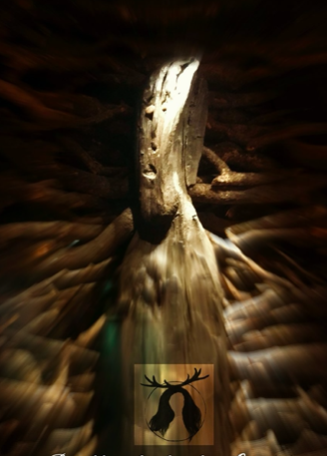
Ballachulish Figurine - National Museum of Scotland

A Solstice Visit to the Woman of Ballachulish

December 20, 2023
solstice sunrise.jpg

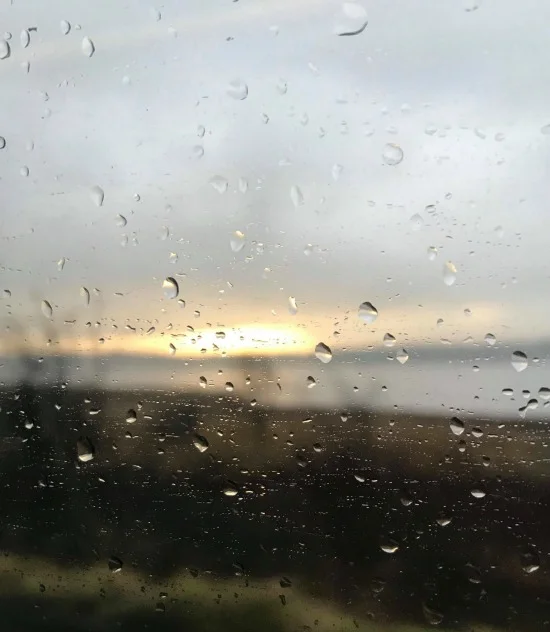
Winter Solstice morning sun over the River Clyde, Scotland

 It was a gray and cloudy, rainy Winter Solstice morning. We didn’t see the sun till a few hours after dawn. In the photo above the winter solstice sun appears over the river Clyde, the watery realm of the Goddess Clutha. Clutha Isn’t just associated with the river she is the entire water cycle, from the rains coming in from the west and into Loch Lomond which flow into the river Leven and then into the mighty River Clyde om their journey to the sea. 

This Winter Solstice I was on a pilgrimage to visit a very ancient figure. A journey which took two trains, three buses and two coaches. A journey across to the other side of the country to the east coast and the city of Edinburgh.

I was off on a pilgrimage to meet an ancient 2,500 year old wooden figure called the Ballachulish Figurine. She is a figure of the Straights at the point where the waters of Loch Leven flow into the sea. For folks travelling by water this can be a turbulent passage. She was found in November of 1880 with the digging of the foundation of a house.

The Canmore Record suggests that she represents a Scandinavian deity - as she is very similar to many, although smaller, Scandinavian carvings. They also state that her pedestal suggests that she may have been mounted in the prow of a galley. The historian Anne Ross, however, suggests that the figure is Celtic in origin, comparing it with several similar figures.

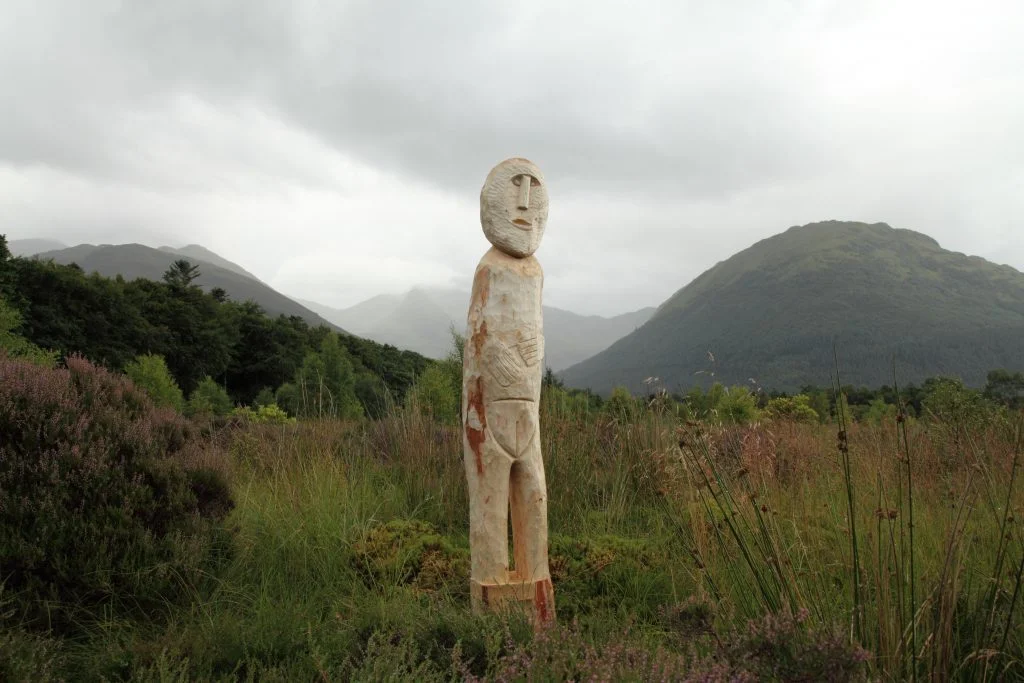
Replica of the Ballachulish Goddess - which was buried at the site

Replica of the Ballachulish Goddess - which was buried at the site


Ballachulish Figurine

(Text taken from the National Museum of Scotland)

The life size carved wooden sculpture of a female is cut from a single piece of alder wood and has quartzite pebbles for eyes. It dates from approximately 600 BC and is on display at the National Museum of Scotland in Edinburgh.

The mysterious Ballachulish figure is a roughly life-sized figure of a girl or goddess, carved from a single piece of alder, with pebbles for eyes. It was found during building work in November 1880, under deep peat. It was lying face down on the gravel of an old raised beach, around 120 metres from the shore of Loch Leven. It might originally have stood beside a pool. The figure has been radiocarbon-dated to around 600 BC, making it over 2,500 years old, and belonging to a period when iron was beginning to be used in Scotland.

Details of the carving are hard to see, but are clearest on the old photograph. The slender body is naked, and seems to be hairless. The lower part is definitely female, but the chest is flat, so the figure may represent a girl or young goddess. She is shown clutching a container of some sort, with pointed objects sticking out of its top. She also holds, in each hand, something that looks like a man’s private parts. Her pebble eyes stare out and her mouth is slightly open. The legs end in a solid block of wood, with a rectangular hollow carved into its front. The height of the figure, when found, was around 145 centimetres (just under 5 feet).

Pebbles found embedded in the bottom of the block suggest that the figure had originally stood on the raised beach, and had fallen over – or been deliberately toppled over – before the peat formed. Under and above the figure were found intertwined branches and twigs, with a few straighter poles. These could be from a wickerwork container, or a little shrine surrounding the figure.

A supernatural being?

Although the figure is unique in Scotland, other wooden figures dating to the Bronze and Iron Ages are known from Britain, Ireland and the Continent. Often these are found in special places – beside a spring, or where a trackway crosses the wetland – and they are thought to represent supernatural beings. Ballachulish is a special place too: the figure would have overlooked the dangerous straits linking Loch Leven with the sea. Perhaps this odd-looking figure represented the goddess of the straits, to whom prehistoric travellers would need to make an offering if they wanted to be sure of a safe crossing.

A rich prehistoric landscape

The area is rich in archaeological remains. Within half a kilometre there are several Bronze Age burial monuments, and some years before the figure was dug up, a peat-cutter discovered ‘several barrow-loads’ of worked flint, inside a round building, deep under the peat. The Ballachulish Moss area is nationally important for its archaeology, and is a Scheduled Ancient Monument.

A conservation nightmare

Today, the Ballachulish Figure looks very different from when it was found. There were no scientific techniques to preserve waterlogged wood in the 1880s, and although people wanted to keep the figure wet, they could not find a container large enough, so they decided to let it dry out. It was taken to the (then-named) National Museum of Antiquities of Scotland in Edinburgh over two weeks after its discovery, and during the journey it broke at the legs. When it dried out, it warped and cracked, and a large piece broke off.


A Story of Place

This figure is also called ‘The Goddess of the Straights’ which is the point where the waters of Loch Leven flows into the sea. A nearby mountain is called Beinn a’ Bheithir, or ‘hill of the thunderbolt’ and is associated with a local old crone - Cailleach Bheithir. The Cailleach has many qualities but of course she is associated with the wild weather of winter. Her story has changed over the years from the closest we have to a creation story to today where she is looked upon in pupolar culture as an evil and cruel old woman. Her ancient role is the renewal at winter. She strikes life down, sending it back to its roots for without death there would be no rebirth in spring. So hers is an essential role and yet a culture fixated on youth with a ? ?? fear of death onviously shuns and old crone with her message of death and renewal.

It is possible that she is the Cailleach of Ballachulish yet the beleif of the people had changed and morphed by the time she was sculpted.

Another site not too far and situated on the west coast is Loch Awe and the story of the Cailleach and how Loch Awe was formed.

 The Cailleach would wander the hills with her herd of deer (her fairy cattle). Every morning she would head to the summit of Ben Cruachan and remove the capstone from the well, letting the water flow out. After a day of wandering the hills and letting her herd graze she would head back to Ben Cruachan and put the capstone back on the spring. But one night, tired after wandering the hills all day she feel asleep in the last hours of daylight, sleeping so soundly she slept on into the night forgetting to put the capstone on. The capstone was a huge boulder and so normal mortal folks wouldn’t have the strength to move it. So the water kept flowing and gushing down the mountainside, it flowed through the pass of Brander forcing its way into houses and drowning the people asleep in their beds, it drowned all their cattle and other animals and then it gathered in a large hollow and formed Loch Awe. When she awoke she heard the water running and was horrified to see she’s forgotten to replace the capstone and her grief was so deep to all the death she has caused that in her mourning she turned to stone.

ballachulishfigure-originalphoto.jpg

Her reading is open to interpretation as we red her with our own perception. personally I don’t see the ‘basket’ she is holding, I see a well defined ‘pubic’ area, to stress her femaleness, although the left hand side of this groove does move above this area.

She is a stark figure, looking out from her quartz pebbles, stones which have metamorphosed in the heat and pressure of the earth. She is wild and untamed, she was important enough to be carved and put in an exact position.

48395528_788077211525135_3417564146680463360_n (1) (1).jpg

Her temple is outdoors, it’s the thunder and rain-clouds, mist and the call of the seagulls. But on this Winter Solstice day her temple was the National Museum in Edinburgh. To walk down the corridor to meet her was a procession, I took each step slowly and with purpose. I could feel the energy building as I got closer. I hadn’t brought offerings, I had brought myself. I wondered of folks would have laid her offerings - they would have known her well enough to know what offerings were suitable.

She is wonderful. Dark and mysterious. The life that she has seen. I don’t know how she feels about being cooped up in a museum, yet she has the vision to see through the walls, see through the layers of time, see into what matters. I don’t know her well enough to leave offerings - maybe she’d like a nip of whisky or perhaps a hunk of bread that little feathered ones can eat - but instead I have my yearnings to learn her mysteries.

I have nothing new to add to her story, just merely the opportunity to retell her story and my journey to meet this quartz eyed woman - for I am sure she and I will meet again on a wild and windy hillside.

The Day the Cailleach Caught Fire. A Bealltainn Tale

April 30, 2023

The old crone noted that the last two weeks have been unseasonably warm, and she was looking forward to days of snoozing with her fairy cattle up in the high corries. Then suddenly she sneezed, then she sneezed again. As she wiped her nose with her sleeve she looked around, and just south of Loch Lomond was a long grey-brown plume of smoke. She had to shake her head, refocus her eyes and have another long sniff. Fire, she confirmed muttering to herself, before she realized FIRE! Snow on the mountains and fire on the moor, what to do, what to do! 

Snow on the mountains and fire on the moor, what to do, what to do! 
 
She began running in her undulating gait, and on arriving at the fire she quickly began picking up moths, and a very disturbed curlew and oystercatcher, both sitting on nests. She carefully placed both birds in her pockets, relocating moths and butterflies moths in her hair, picking up an adder (snake), she quickly curled him around her neck.  
Jumping around, stomping out flames with her bare feet, unwittingly she was in fact fanning the flames and before she knew what was happening, her cloak was on fire!
 
To anyone watching she looked like she was dancing a jig, her surprisingly quick footwork putting out the remaining flames. She sat down, winded after all that activity, and wiped her blackened soles. She placed the bird nests far from the scorched earth and brought the mamas back to their eggs. One by one she took the butterflies and moths from her hair, save one that had decided it had taken up residence.

She stood up slowly, tisked a few times through pursed lips, and then did a curious thing. She was feeling rather sweaty from all that work and heat, and a little singed, a little dusted in soot, and her feet felt rather warm – and so she walked the few miles to Loch Lomond and sat down on the banks where she massaged her feet and washed the hem of her cloak.
 
She stepped into the loch waters, gasping a little at the coldness of the water. Slowly she inched her way in up past her legs to her belly, even the old crone was chattering her teeth moving uncontrollably. As she strode out further the water up to her throat and ears she remembered the deep calm, the pressure of the water, and the darkness – all so comforting. A few steps more and she was on the bottom of the loch. 
 
This is not a ritual that humans get to see, for she’s entering into another realm. Humans have forgotten that the ancient world is all around us, it’s the mountain behind the mountain, the rain cloud behind the raincloud. All these normal little things under our noses are the way in, but the majority of humans don't see what's under their noses and much prefer the big lights and the glamour and are so easily distracted they don't see the treasure in the small things.

 
She walked into the loch, who knew she could breathe underwater, he said. She was standing there at the very bottom of the loch – from outside the loch, she seemed huge even gigantic, and yet somehow when in the loch she seemed smaller. Her eyes were closed and her hair moved about her waving in the water. She looked very serene he commented. And she was serene, for all the worries of the fire and the birds had been washed away. Bealltainn sits across from Samhuinn on the wheel, where she ushered in winter by washing her tattered old cloak in the waters of the Whirlpool of Corryvrecken.

This washing is a sacred ritual, a ritual of rebirth, and so Bealltainn mirrors her Samhuinn ritual and so the year renews itself.  As the northern hemisphere comes into summer the south descends into the dark months of winter. 
 

MIDWIFING THE SOUL

Scottish Retreat, 15th - 22nd July, Isle of Eigg. 

In a time of so much uncertainty in the world, you are invited on a deep journey of exploration through story, art, and ritual. Midwifing the Soul is about focusing on matters of the soul, making space for grief, and dancing between the worlds to speak to the ancestors. 

This is a journey of connecting to the soil and soul of the land, of keening at the edge of the ocean and making art that explores your story and your role in this world.

So if you've felt a deep longing, come join me on this Ancestral Mothers of Scotland retreat on the Isle of the Big Women (Eigg) in the Isles of Brighid (the Hebrides).

* 10% discount available for the last few places

CLICK HERE FOR FULL DETAILS AND BOOKING


Virtual Tour - Isle of the Big Women (Scottish Retreat)

March 23, 2023

Join me on a virtual journey to the Isle of the Big Women

Read More

The Story of A Doll

December 08, 2022

As we cycle into the dark of the year a ritual on my path is to bury a doll. She is a small clay figurine, curled up in a foetal position.

This is a ritual normally carried out at Autumn Equinox, in preparation for the coming dark of the year. But this year things are a little out of kilter and she was buried later, in the threshold in which Samhain and Winter Solstice overlap.

I can view the hill I buried her on from my house, it’s not towering tall nor holds a circle of standing stones, but to me it is sacred ground.

It’s about a 5 mile walk, at a rough estimate. I pause for a moment as I step from the tarmac road and onto the land, a threshold marking two very different worlds. I hadn’t walked far until I came across a Barn Owl pellet, a mass of regurgitated bones all shaped together with fur and other indigestible parts. I stoped for a second or two using a stick to pull the pellet apart, a momentary reading of the bones of little creatures, sacrificed by great talons.


In previous years the doll was buried in a large black ceremonial cauldron, made by the hands of a friend. In 2019 that changed, as I felt the call to bury her in the earth.


She would travel with me in a small circular tin, and in the photos above I’m on the Isle of the Big Women looking over to Skye. She was buried in the dark peaty soil, further down the hill from a sacred site. As we moved in 2020 and lockdown I felt her connection from under the soil as each of the seasons passed. I held on with a thread, planning to perminantly move back home when I could.


Now I am back on home soil, walking my favorite hill. I have placed dried Rowan berries into the little clay doll for this cycle of the deep, and added a few fresh holly berries from a familiar Holly. Holly trees often acted as markers in the landscape, so effective is their ever green against the browns and golds of winter foliage that I can see her from about 5 miles away, from my window!


The Guardian Holly Tree


There have already been some hard frosts since she was lain in this little opening between two stones. This is at the foot of a dry stane dyke (a traditionally built stone wall) with the roots of my beloved Holly tree below her.

I will visit her again around Imbolc and between now and Spring Equinox there will be rain, sleet and snow. I will return at Spring Equinox to retrieve her, a ritual of divination. But for now she lies on the hill with shortening days, curled up in a foetal position, a fitting posture for awaiting the rebirth of the sun. She won’t see those new rays of light but the little berries pressed into her hair hold sacred intentions which I hope will be blessed by the new light.


The Old Antlered One - A Winter Solstice Gathering

Sunday 18th Dec, 7.30 - 9.30 UK GMT / 2.30 - 4.30 East Coast US

Stories from the Path of the Ancestral Mothers of Scotland:

  • The Old Antlered One - the tale of a great skeletal antlered figure who brought the land into being 

  • She Who Runs with the Herd - The origin story of the Sisterhood of the Antlers and the women of the clan who followed the herds into the lands which became known as Scotland. 

  • Trance dance - Download the template and create a mask to wear for a between the worlds journey

  • Antlered Oracle Doll - Make an oracle doll with antler or stick - with paper scrolls 

Full details and booking

Keening with the Cailleach

November 20, 2022

Keening With the Cailleach

Sunday 27th November, 7.30-9.30 UK GMT/ 2.30 - 4.30 US Eastern

______________________

SACRED STORIES

KEENING

CAILLEACH AS MIDWIFE

CAILLEACH ORACLE DOLL

I invite you to bring all the different threads of sorrow - your personal sorrow, sorrow you feel on a global level - the sorrows for our bird and animal kin, sorrows of injustices too many to count, sorrow’s for all unfolding from climate devastation, and those deep-rooted sorrows we can’t even name.

This is also a ritual of renewal like clothes that are washed as Clarissa Pinkola Estes highlights, to wash is to purify, a baptism - to renew, a reviving re-discovering what we hold true, what we hold sacred. This is a sacred ritual.


The Cailleach at the Corryvrecken Whirlpool - Digital art by Jude Lally


Through the story of the Cailleach’s Cauldron, you're invited to enter the swirling waters of her whirlpool, to let those sorrows go as the waters churn around you. It’s not an easy ride but a worthwhile one. This cauldron has a way of pulling things apart, of pulling you apart and in a ritual of renewal to put things back together again. It’s her great ritual of renewal to

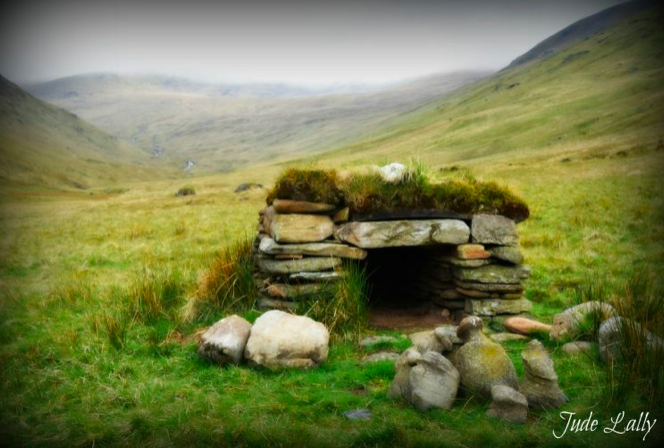
Tigh na Bodach, Shrine of the Cailleach, Glen Cailleach, Perthshire, Scotland

The second story we will explore is Tigh Na Bodach, the Shrine of the Cailleach that has sat in Glen Cailleach for hundreds and perhaps thousands of years - who knows? You're invited to take your place by the women who tend to the stones, who have spent their summer up in the high glens grazing the cattle.

This ritual is packing away the stones until Bealtaine. They will remain in the little shrine over the winter months and in this ritual, the women give thanks and pass the stones around before placing them in the shrine. It is a ritual of gratitude and also an opportunity to place things into the shrine - problems you haven’t worked out and answer for projects that maybe should be wrapped up in layers of cloth and placed at the back of the shrine.

Cailleach Oracle Doll

As this time of the year is like a battle of artificial lights pitted against an ancient darkness, a fertile and restful darkness I also you to gather some natural materials - a shell or a bone, a feather, yarn or a small branch. As we listen to music you’ll assemble a simple oracle doll - a way of tending to the Cailleach over the dark months. A reminder of what you tucked into the back of the shrine and what you whispered to the stones - a doll to be reassembled come Spring Equinox.

full details and sign up

Cailleach Circle

October 17, 2022

I designed the Cailleach Circle not just to learn about her but to experience her.
A series of creative tools take you on a journey, one building on the other giving you a full experience of the essence of the story

Read More

Arriving in Scotland and a Gathering of Big Women

June 05, 2022

Ardmore Point, on the River Clyde

Arriving isn't an instant thing, it happens in stages. While a plane or a train might deliver you to your destination, arriving is a process that takes its own time.

After a three-day journey by car, plane, and train, I have been arriving a little more each day. While the journey was stressful all our documents were in order and the French and UK passport control were happy with our dogs' health certificates. All the connections went well although Bailey had a bit of a meltdown on the last leg, I can't blame her as the train was delayed by 2 hours. Mama is the perfect travelling dog and slept for most of the journey.

Our journey took us from Atlanta to Paris, Air France is one of the few airlines that are currently flying dogs without having to book through a separate agency.
Once arriving in Paris we hired a car and drove north, under big skies and farmed landscapes with huge towering wind turbines - such a stark juxtaposition against old French farmhouses.
On arriving in the coastal town of Calais we headed to the beach to dig our toes in the sand as the wind whipped up mini whirlwinds.


For many years I lived in Brighton, on the South Coast of England and so enjoyed the view from the other side of the channel. Yet out towards the horizon, you could see the white caps of wild waves in the English Channel and my heart lurched to think of those who are fleeing desperate political conditions and give over their life savings to make the perilous journey on small inflatable open boats.
While the UK is more than able to accept refugees modern the current government policy is now to send people arriving illegally to Rwanda.

Arriving

My arrival happens by invitation, by the swoop of a swift's wing, in the pattern of moss under the bridge, with three swans taking off and into flight.
Falling into a pattern helps, taking one step after the other into the morning and evening.
The rain showers coming in from the west drop their rain in the realm of the Goddess Clutha. With each drop I become part of the water cycle myself, each cell reattuning to this longitude.


Dumbarton sits at the place where the River Leven meets the mighty River Clyde. The Leven flows out of Loch Lomond and races in tight meanders down towards the Clyde. Here, where both rivers meet sits the towering form of Dumbarton Rock, the plug of an ancient volcano.

Most mornings I head to the park, walk along the shore and collect swan feathers and sea glass.


Walking along the Leven with Carman Hill in the distance

I've still to visit Carman Hill, my favourite hill. This is the place where I first met the Cailleach, I am waiting till I have fully arrived before I go meet the Old Crone.

Slowly we are cycling towards summer solstice, we have glorious twilight here where the nights are still light until 10pm. Twilight is that place of magic, the place where stories are born and I'll be sharing stories of the Big Women, from the Ancestral Mothers of Scotland in a Keening Circle next weekend - I hope you can join me!

click here to sign up for my newsletter


Keening With the Big Women
Sunday 12th June. UK 7 pm, US Eastern 2 pm 


On the Ancestral Mothers of Scotland Wheel of the Year, the Summer Solstice honors the Big Women, inspired by stories of warriors and amazons from the Western Isles and around the UK. 

  • In this gathering, you'll hear a story of Scathatch, the warrior from the Isle of Skye

  • Plus the story of my own initiation by the Big Women.

  • You'll also be invited to consider your own Big Women qualities


Keening Circle 
This Keening Circle invites you to bring all emotions you are holding - from rage to despair, grief to overwhelm. 
You'll be invited to share how you are feeling in a small group before we bring our emotions into the great cauldron we'll hold at the center of our gathering. 

There is one full scholarship place available

 
Newer / Older
Back to Top